
More Than Just a Nice Smell
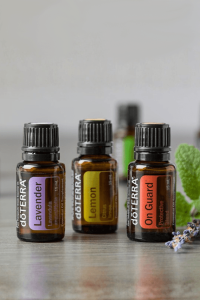
Essential oils are a combination of naturally occurring chemical compounds found in plants, including roots, leaves, bark, flowers, and rinds. These compounds serve to protect the plants and play a regenerative role within the plant itself. When we use essential oils, we’re interacting with these same compounds, and we reap the benefits of these special compounds.
For example, lavender contains linalool and linalyl acetate, compounds that have been studied for their calming effects on the nervous system. It gets nerdy as you read about how it affects heart rate variability and vagal tone, but let’s just say it’s calming. Peppermint contains menthol, which is well-known for its cooling and soothing properties one of my summer favorites both on hikes and when sitting at the beach.
Over the past few years,, many studies and peer-reviewed papers have been published on the effectiveness of essential oils. Have you ever wondered how they work in the body? When you inhale an essential oil, its aromatic molecules travel through the olfactory system directly to the limbic brain, the part of the brain connected to emotions, memory, and mood. This can explain why essential oils can shift a mood quickly. But beyond smell, essential oils can be absorbed through the skin and interact with the body on a cellular level.
Institutions such as Johns Hopkins and other research bodies have explored the antimicrobial, antifungal, and mood-supporting properties of essential oils. There now exists a new body of knowledge on compounds such as terpenes, phenols, alcohols, esters, ketones, and oxides. Ongoing studies of oil compounds have moved them from what was once considered “woo-woo” or out there to being supportive tools grounded in both tradition and science.
One of the many things science has found is that the effects of essential oils depend on where they are grown or sourced, the climate, the time of year, and even the time of day the plants are harvested. Because of the popularity of essential oils, adulteration occurs.
Essential oils sit at a beautiful intersection between ancient wisdom and modern research. They remind us that nature and science are not opposites; they work together.
In a nutshell, essential oils communicate with your brain through smell, interact with your body through skin absorption, and influence physiological systems in measurable ways. The science behind the benefits of essential oils is clear. You can learn more on their site. Science and research are what keep me incorporating essential oils into my daily routine.
Curious how essential oils could fit into your daily routine? Let’s talk it through. Schedule a time to connect and we’ll explore simple, practical ways to get started.