
Supporting Your Immune System
As a health coach and doTERRA® Wellness Advocate, one of the questions I hear often is, “What can I do to strengthen my immune system?”
The truth is, there isn’t one magic food, supplement, or essential oil that can make us immune to illness. Our immune system is an incredibly complex network that works around the clock to protect us.
Rather than looking for a quick fix, I encourage people to think about creating an environment where their immune system can do its job.
Our everyday choices—what we eat, how we sleep, how we move, how we manage stress, and the substances we expose ourselves to—all matter.
The best immune-supporting strategies are often the simplest.
1. Nourish Your Body With Real Food
Your immune system requires a steady supply of nutrients to function properly. Instead of focusing on one “superfood,” focus on variety.
Fill your plate with:
- Colorful fruits and vegetables: fall squashes, apples and pears are just coming into season and fresh figs are still around, Brussel sprouts will be showing up shortly.
- Leafy greens: Think beyond lettuce and kale. Bok choy, chard, collards, endive can all be cooked in a variety of ways.
- Whole grains: I have been adding new seed grains such as amaranth to my diet. Quinoa and buckwheat are high protein favorites of mine.
- Beans and lentils: There are at least 30 types of beans, and many varieties of lentils. Explore new tastes. I prefer dry beans and soak them for at least 24 hours to make them more digestible.
- Quality sources of protein: If you are on social media you know that protein is a thing. I tend to lean towards a more vegetarian diet but will also eat wild caught fish, small amounts of grass-fed beef and pasture-raised chicken.
- Healthy fats: Nuts and seeds, avocados, and olives.
- Herbs and spices: These not only offer flavor but have been used traditionally to support health. This time of year warming spices such as ginger, cinnamon, turmeric and black pepper, cloves, garlic, and others have compounds that support a healthy immune system.
Vitamins and minerals—including vitamin C, vitamin D, zinc, and many others—play important roles in normal immune function. A varied, nutrient-dense diet is generally the best place to start. For some people, a quality supplement may also help fill nutritional gaps when dietary intake is not sufficient.
When choosing supplements, I encourage you to look at the ingredients, quality, dosage, and form of the nutrients rather than simply choosing a product because of its marketing claims.
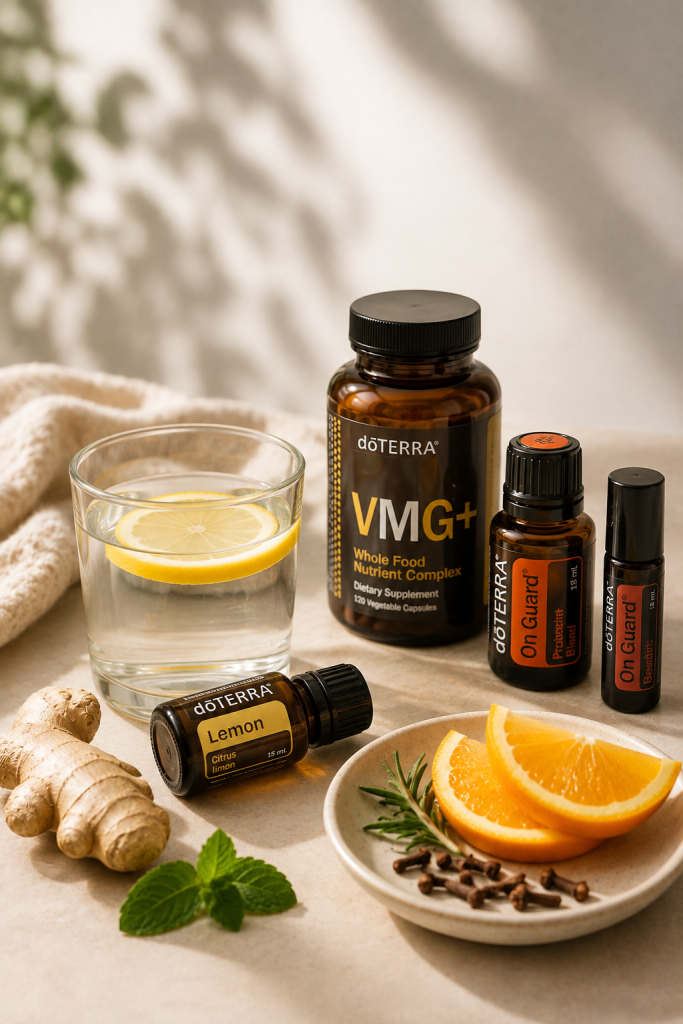
One of the supplements I personally use is doTERRA®’s VMG+.
And don’t forget your gut! A significant portion of the body’s immune activity is associated with the gastrointestinal system. Eating plenty of fiber-rich plant foods and including a wide variety of plants in your diet can help support a healthy gut microbiome and overall wellness.
I can’t talk about nutrition and immune health without touching upon things to avoid. Sugar, alcohol, and processed foods are all going to tax your immune health.
2. Make Sleep a Priority
Sleep isn’t simply downtime. It is an important part of the body’s repair and regulatory processes.
Research supported by the National Institutes of Health has found that consistent, adequate sleep supports normal immune function, while sleep loss can negatively affect immune responses.
For most adults, that means aiming for at least seven hours of quality sleep most nights; life happens, so don’t stress if you are up late a night or two or have a restless night. It happens to everyone.
One quote I like to live by is “Don’t sacrifice tomorrow’s health for today’s productivity”. Sometimes the most productive thing you can do is go to bed!
3. Move Your Body
Exercise supports much more than our muscles and cardiovascular system. Regular physical activity can also support immune health, improve sleep, and help manage stress.
You don’t have to spend hours in the gym. Walking, gardening (what better time to get outside than September, when it is just a little bit cooler?) Dancing is one of my favorite forms of movement. I recently added Kimo Sounds to my dance playlist. If you have a favorite song to dance to I’d love to hear what it is. Any regular movement throughout the day—can contribute to a healthier lifestyle so move it!
And here is the thing: more isn’t always better. Excessive, prolonged, intense exercise without adequate recovery can place additional stress on the body.
The important thing is to find movement you enjoy and be consistent.
4. Manage Stress
We all experience stress. The problem is when stress becomes our normal state.
Chronic stress can affect many systems throughout the body, so creating regular opportunities to slow down and recover is an important part of wellness.
Sometimes supporting the immune system means doing less, not more.
Some things to try:
- Deep breathing: Simple box breathing can be a wonderful way to slow down. Breathe in for 4 counts, hold for 4, breathe out for 4, and hold for 4. Repeat five times.
- Meditation or prayer: Meditation doesn’t have to be a long, arduous process. Even a few minutes of quiet time can create space to pause and reset.
- Time outdoors: Gardening, walking, or simply spending time in nature can be a wonderful way to slow down. I especially enjoy what is sometimes called “forest bathing” or forest breathing.
- Gentle movement: Yoga, tai chi, or simple stretching can help you reconnect with your body.
- Journaling: This is one I am still working on! I’m not always consistent, but sometimes getting your thoughts and feelings onto paper can help create a sense of release and perspective.
5. Stay Hydrated
Water is essential for virtually every process in the body. It is easy to think about hydration when it’s hot outside and you’re sitting on the beach or by the pool, but hydration is important all year long.
In the cooler months, I tend to add mineral-rich herbal teas made from nettles, oat straw, mint, and tulsi.
I also continue to sip on doTERRA® Recharge as part of my wellness routine.
And, of course, simple habits such as washing your hands, not smoking, and limiting alcohol are also important components of protecting your health.
A Few Additional Ways to Support Immune Health
Once you have your foundations in place, there are some additional foods and wellness practices you may want to explore.
Essential Oils
Essential oils can be a wonderful complement to a healthy lifestyle, but I believe it is important to put them in the proper perspective.
As a doTERRA Wellness Advocate, I love essential oils as tools for creating supportive wellness rituals. I use them as part of my overall approach to wellness, but I don’t view them as a replacement for good nutrition, adequate sleep, movement, medical care, or other foundational health practices.
For example, doTERRA®’s On Guard® blend contains wild orange, clove, cinnamon, eucalyptus, and rosemary essential oils. It is available in several formats and is marketed by the company as part of its wellness product line.
When considering essential oils, remember that laboratory and preliminary research does not necessarily translate into proven effects in humans. Essential oils should be viewed as a complementary wellness tool rather than a treatment or cure for illness.
Elderberry
Elderberry has a long history of traditional use, particularly during the colder months. Elderberries are rich in anthocyanins and other naturally occurring plant compounds with antioxidant activity.
Some research has explored elderberry’s potential role in supporting immune health, although the evidence is not strong enough to consider elderberry a treatment or cure for illness.
I think of elderberry as one more way to add variety and plant-based nutrients to an overall healthy lifestyle—not as a magic bullet.
Mushrooms
Mushrooms have long been valued for their potential to support overall wellness. Many varieties contain compounds called beta-glucans, which have been studied for their effects on immune function.
Mushrooms such as shiitake, maitake, reishi, and turkey tail contain naturally occurring bioactive compounds that interact with biological pathways involved in immune function.
Adding a variety of mushrooms to your diet can be a delicious way to nourish your body and incorporate more diverse plant foods into your meals.
Support, Don’t “Boost”
When it comes to the immune system, I like to think in terms of supporting rather than “boosting” the immune system.
Instead of asking:
“What can I take to boost my immune system?”
Try asking:
“What can I do today to support my body’s natural ability to protect and repair itself?”
That question leads us back to healthy foundations: daily habits, not quick fixes.
Your immune system is working for you every single day—whether you think about it or not.
So this season, rather than searching for that one thing that will “boost” your immune system, look at the bigger picture.
- Are you nourishing your body?
- Are you getting enough sleep?
- Are you moving?
- Are you managing stress?
- Are you staying hydrated?
- Are you giving your body time to rest and recover?
Those simple choices, practiced consistently, can go a long way toward supporting overall health and well-being.
And if you need support incorporating healthy habits into your daily routine, have questions about the supplements I use, or want to learn more about how I incorporate essential oils into my wellness rituals, reach out!
This article is for educational and informational purposes only and is not intended to diagnose, treat, cure, or prevent disease. Essential oils, supplements, and other wellness products should complement—not replace—appropriate medical care.